Snowboard Wax Types Explained: Cold, Warm, All-Temp & More

There are so many snowboard wax types: Cold, warm, all-temp, rub on, spray on, etc. which one should you choose?
In this guide, we’ll break down every wax type, explain what makes each one best suited for its conditions, and help you choose the right one for your needs.
Cold Wax
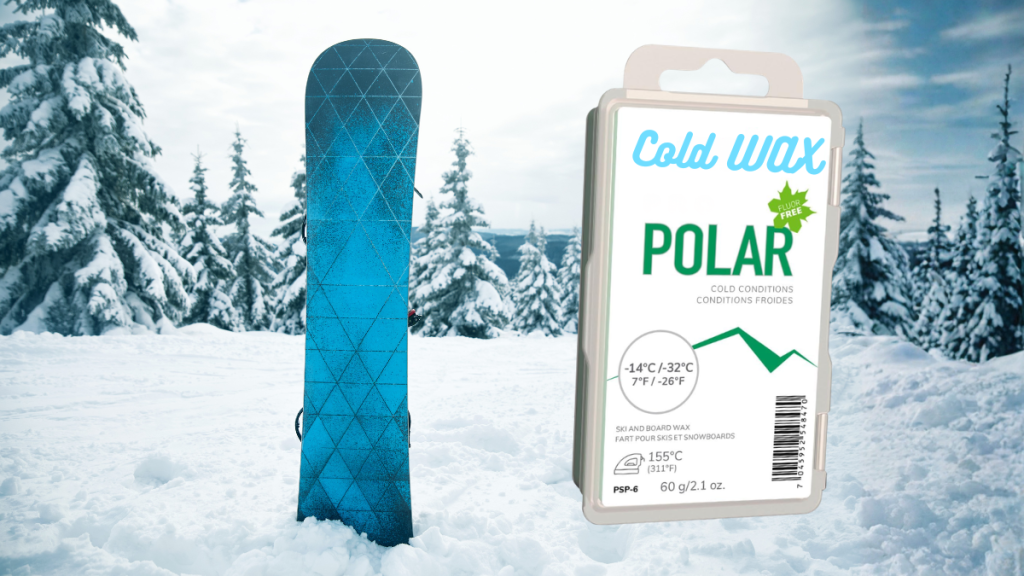
As the name suggests, cold wax is designed for cold conditions, generally within a temperature range of -10°C to -30°C (14°F to -22°F), though this varies by product.
But what makes cold wax better in cold snow? In very cold temperatures, snow crystals harden and become abrasive. Cold wax is harder than other wax types, which is what makes it better at protecting your base in these conditions.
When you ride, friction between your board and the snow generates heat, melting a thin layer of snow into a lubricating water film. In cold conditions, that film is minimal, meaning the base spends more time in direct contact with the snow rather than gliding over a wet surface, which raises friction. Cold wax is specifically formulated to reduce this type of dry-contact friction, which is why it delivers better glide in cold snow than other snowboard wax types.
Warm Wax
Warm-temperature wax is made for warmer, wetter snow. It’s perfect for spring conditions and slush. It generally works in temperatures above -2°C (28°F), though this varies by product.
Why is warm wax better? In warm conditions, the friction problem is the opposite of cold snow. Instead of too little water, there’s too much. This excess water creates a suction effect and pulls your board closer to the snow. You’ll feel like something is dragging you back, slowing you down.
Warm wax can repel water much more efficiently than other snowboard wax types. Reducing drag and giving you a smoother ride.
All Temp Wax
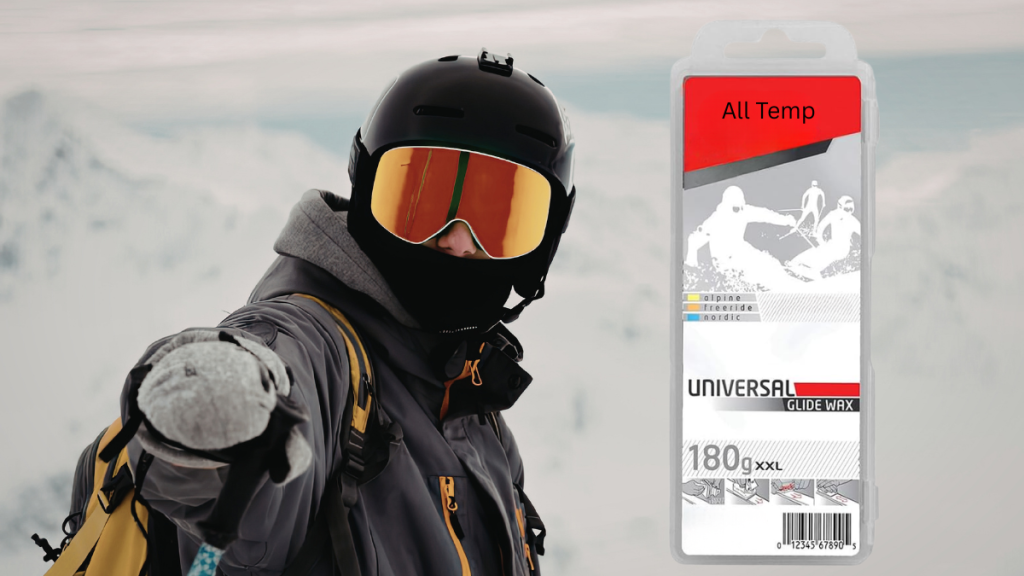
All-temp wax sits in the middle ground between cold and warm wax, typically covering a range of -10°C to 0°C (14°F to 32°F) according to Burton. It won’t outperform a cold-specific wax in freezing conditions or a warm wax in spring slush, but it makes up for that with versatility, making it the most popular choice among casual riders.
One of the biggest advantages of all-temp wax is that it removes decision making entirely. You don’t need to check forecasts, or wonder whether today calls for a cold wax or a warm wax.
It also eliminates the need to own multiple waxes. One bar handles most situations: weekend rider, road trip, freezing mornings, afternoon slush, and you can even use it as storage wax. All temp wax is not the best wax for any specific situation, but it’s rarely the wrong wax for any of them. Unless you are competing, a bar of all temp wax is all you ever need.
Other Snowboard Wax Types
The following waxes aren’t meant to replace hot waxing. They’re quick and easy to apply, but because they sit on the surface rather than being absorbed into the base, they don’t last nearly as long.
Rub On Wax
Just a bar of wax you can rub directly onto the base.
Paste Wax
It’s a soft wax in paste form, usually comes in a container with a pad (kinda like make up). To apply, get the paste onto the pad and rub it onto the base.
Spray On Wax
It’s just wax in a spray bottle. Spray it on, spread it evenly, let it dry, then buff it.
Base Prep Wax
This is not a performance wax, it’s a preparation wax. It’s made with smaller wax molecules that penetrate deeper into the base than regular wax. This makes it useful in a few ways: it conditions the base to hold the next wax better, it can be used for a deeper clean through hot scraping, and it works well as a storage wax.
Storage wax
Storage wax isn’t a specific product. All-temp, base prep, or warm wax all can be used as storage wax (find out more here). Apply it the same way you would with hot waxing, but leave a thick layer and don’t scrape it off. That coating is what protects your base during the off-season.
Summary of Snowboard Wax types
|
Wax Type |
Conditional Benefits |
General Temperature range |
|---|---|---|
|
Cold |
Reduces dry contact snow friction and better base protection in cold weather |
-10°C to -30°C (14°F to -22°F) |
|
Warm |
reduces wet drag in warm weather |
above -2 °C |
|
All Temp |
Extremely versatile, convenient |
-10°C to 0°C (14°F to 32°F) |
|
Spray on, Paste, Rub on |
Quick and easy application |
better suited for warm weather |
|
Base Prep |
Preps the base to help the next wax bond better, also good as storage wax and hot scrape deep clean |
Not performance wax |
|
Storage Wax |
Apply at the end of a season, keep your base healthy over the summer |
Not performance wax |
Know which wax you are getting and ready to fire up that iron? Check out this detailed step by step guide on how to wax your snowboard for beginners!
I’d love to hear from you: Got questions? Spotted something unclear or want to share feedback? Please reach out to me in my contact page!