What Makes a Good Waxing Iron? 5 Key Features to look for

A good waxing iron should have a wide enough temperature range to cover most wax types, while maintaining a stable and consistent heat. The base of the iron should also be shaped to glide easily and spread wax evenly across the surface. In this guide, we’ll explore the 5 key features that make this possible.
Temperature Range, Control and Stability
Choose the Right Temperature Range for your Wax
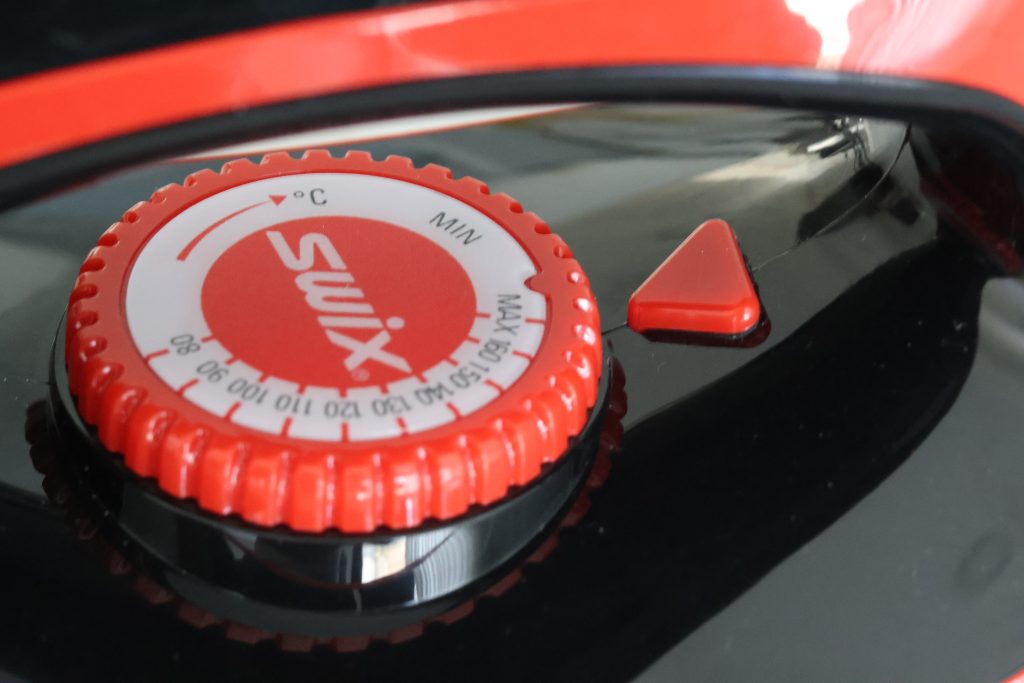
Temperature range is an important quality to consider because different waxes require different levels of heat to melt and apply correctly. Softer warm-condition waxes need lower temperatures, while harder cold-condition waxes demand significantly higher settings, and a good iron must be capable of both.
For beginners, a waxing iron with a range of roughly 100–170°C is sufficient. It’s low enough for soft waxes and high enough for hard waxes. But if you already have a specific wax in mind, just make sure the iron you choose can reach the temperature it requires.
Stable Temperature Control Is the Most Important Feature
Maintaining a stable temperature is very important for a good wax job. But waxing irons don’t hold one perfectly fixed temperature. This is because a waxing iron manage its temperature like the thermostat in your home; it cycles on and off to keep the metal base within the target temperature range.
If the temperature range is too wide, you would get an uneven wax job by overheating one section and barely melting the wax in another section. The best waxing iron should have minimum temperature swings.
Unfortunately, temperature swing isn’t typically list as a product spec, so you won’t find it printed on the box. Instead, you’ll need to infer how stable an iron runs based on other indicators (base plate and iron type) which we’ll cover later in the article. But generally, irons with more consistent temperatures tend to cost more.
Base Plate Thickness and Geometry
Thicker Base Plates Hold Heat More Consistently
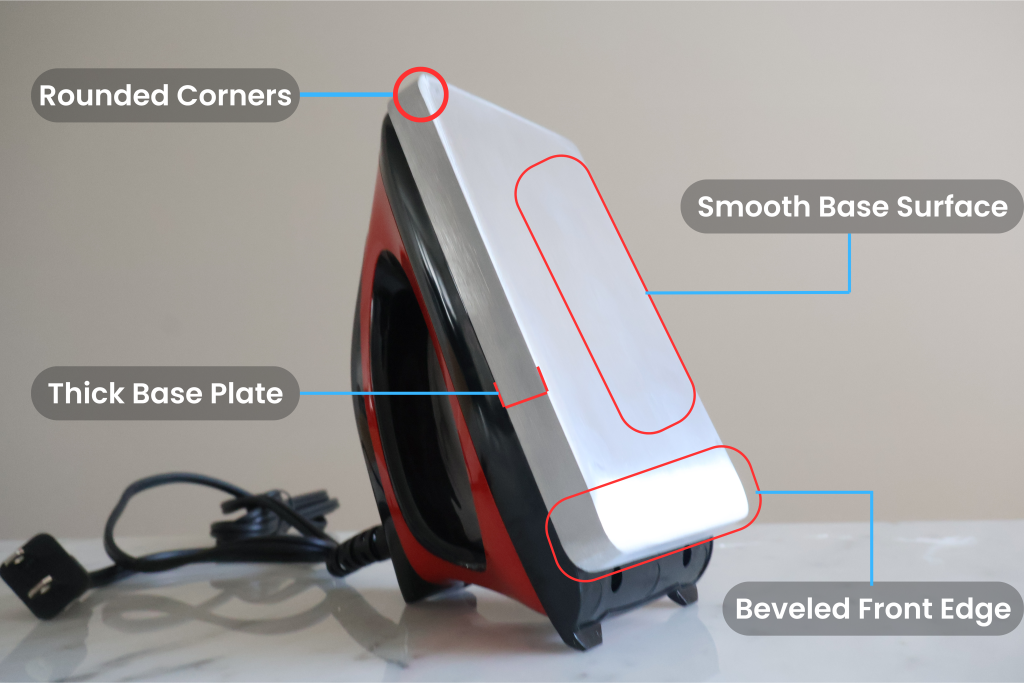
A thicker base plate is better at maintaining a stable temperature because it stores more heat. When the plate touches a cold snowboard base, that stored heat prevents the plate from losing temperature too quickly, keeping the wax melting smoothly and evenly the whole time.
A thicker plate also spreads heat more uniformly from edge to edge. A thin plate, by contrast, loses heat faster and is more prone to developing hot and cool spots, both of which lead to uneven wax application.
A 12 mm base plate is generally sufficient for most beginner and intermediate tuners.
Base Plate Geometry that Spreads the Wax Evenly
The front edge (the leading edge in the direction of travel) should be slightly tilted up (also known as beveled). It’s designed like this because you want to glide your iron over the wax to melt it, so that the snowboard can absorb the wax. If the front edge is flat, you would scrape the wax ahead of the iron instead of letting the wax flow under it.
The corners of the base plate should be rounded. Sharp corners pose a risk of gouging the snowboard base as you move the iron, rounded corners eliminate this risk. Sharp corners also tend to concentrate heat at a single point, which leads to an uneven distribution of wax.
The surface of the base plate should be designed to spread the wax evenly across the snowboard base. Different brands achieve this in different ways. Some irons feature a smooth base plate, which spreads the wax evenly through continuous, uninterrupted contact with the surface. Others use a grooved base plate, which guides the wax along controlled flow paths, ensuring even distribution across the base.
Analog VS. Digital Waxing Irons
The key difference between analog and digital waxing irons lies in how they regulate temperature.
Analog irons typically use a bimetallic strip that physically bends and flexes in response to heat. When the iron gets too hot, the strip bends and cuts the power; when it cools down, it snaps back and restores power.
Digital irons typically uses a sensor that sends continuous real-time temperature readings to a microprocessor. The microprocessor can make much finer, faster adjustments to the heating element, keeping the temperature much closer to the exact target value.
Digital irons are much better at precise temperature control, but they are also much more expensive. For recreational riders, a quality analog iron is totally sufficient.
Qualities of a Good Waxing Iron Summary
A good waxing iron should have the following features:
- Temperature range should be wide enough for all of your wax types.
- Precise temperature control.
- Maintain a consistent heat level (thick iron base and digital control).
- Glide smoothly over the wax.
- Spread the wax evenly.
Got the right waxing iron and ready to wax your board? Check out this beginner’s guide on how to wax your snowboard! According to Burton, you should wax your snowboard after every three riding days.
I’d love to hear from you: Got questions? Spotted something unclear or want to share feedback? Please reach out to me in my contact page!