Signs Your Snowboard Edges Need Sharpening: 5 ways to tell

Your snowboard edges play a big role in how your board feels on the slopes. Sharp edges give you grip and control while dull edges can make riding feel harder than it should.
If you are wondering whether your snowboard edges need sharpening, then this guide is for you! We’ll cover what dull edges feel like while riding and what you should be looking for at home.
What Dull Snowboard Edges Feel Like While Riding
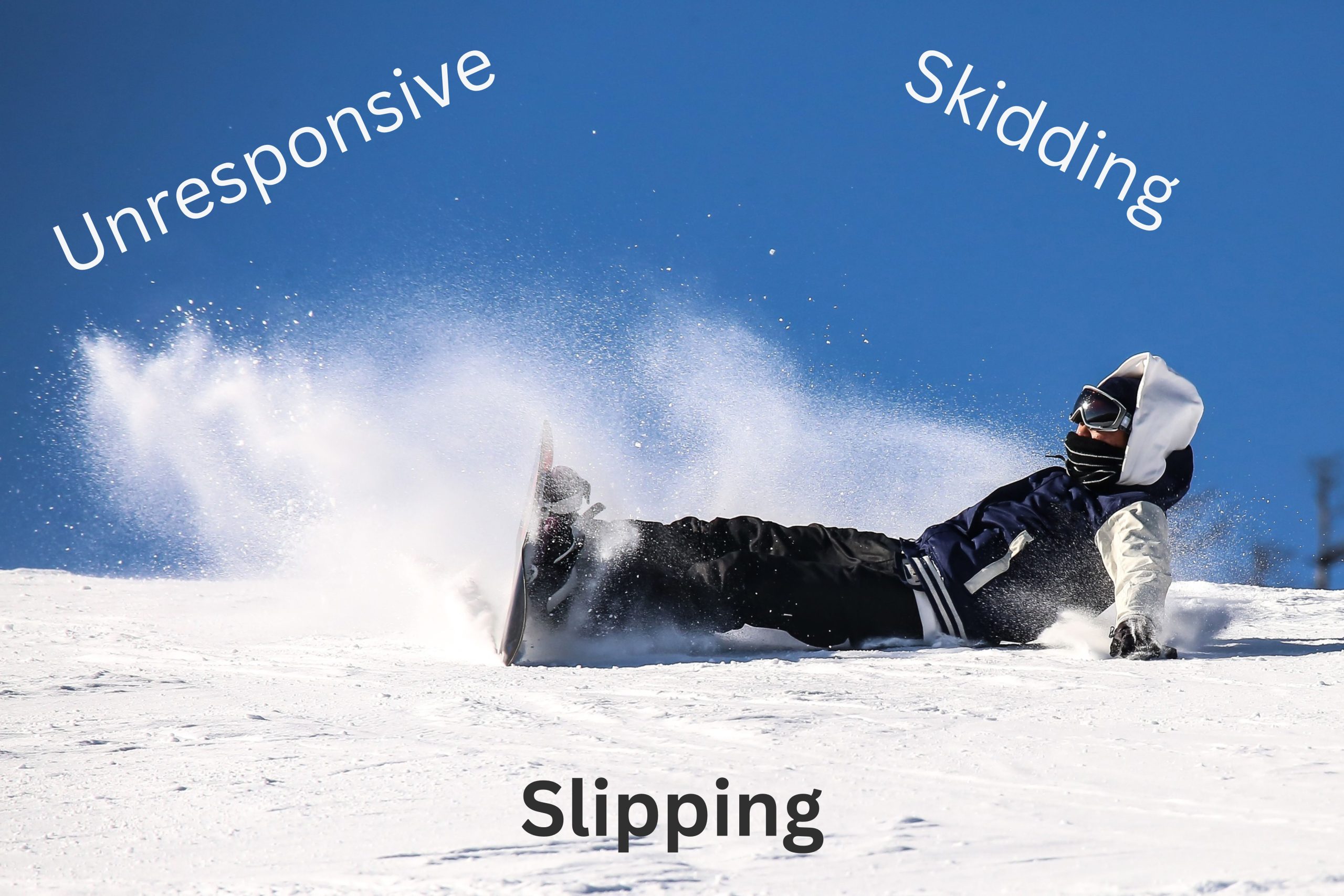
Your Board feels Unresponsive
A sharp edge engages quickly when you shift your weight, but a dull one won’t bite cleanly, creating a noticeable delay between your input and the board’s response.
If your edges are dull, you may find yourself using more body movement than usual just to get the same response.
More Skidding, less carving
Carving puts the most demand on your edges. A clean carved line requires the edge to grip firmly enough that the board follows the sidecut through the turn. When the edge is dull, it can’t hold that grip, and instead of following the sidecut, the board slides outward, causing you to skid.
If you ride powder, the skid might be hard to notice because even a worn edge can sink into the soft snow, giving you some grip. But if you ride on hard-packed groomers or icy patches, the skidding is much more noticeable. A dull edge can’t cut into the hard pack, so you’ll feel your edge slipping out and failing to hold. Worst case, the board may suddenly washing out when you least expect it, making you fall and cause injury.
How to Check for Dull Snowboard Edges at Home
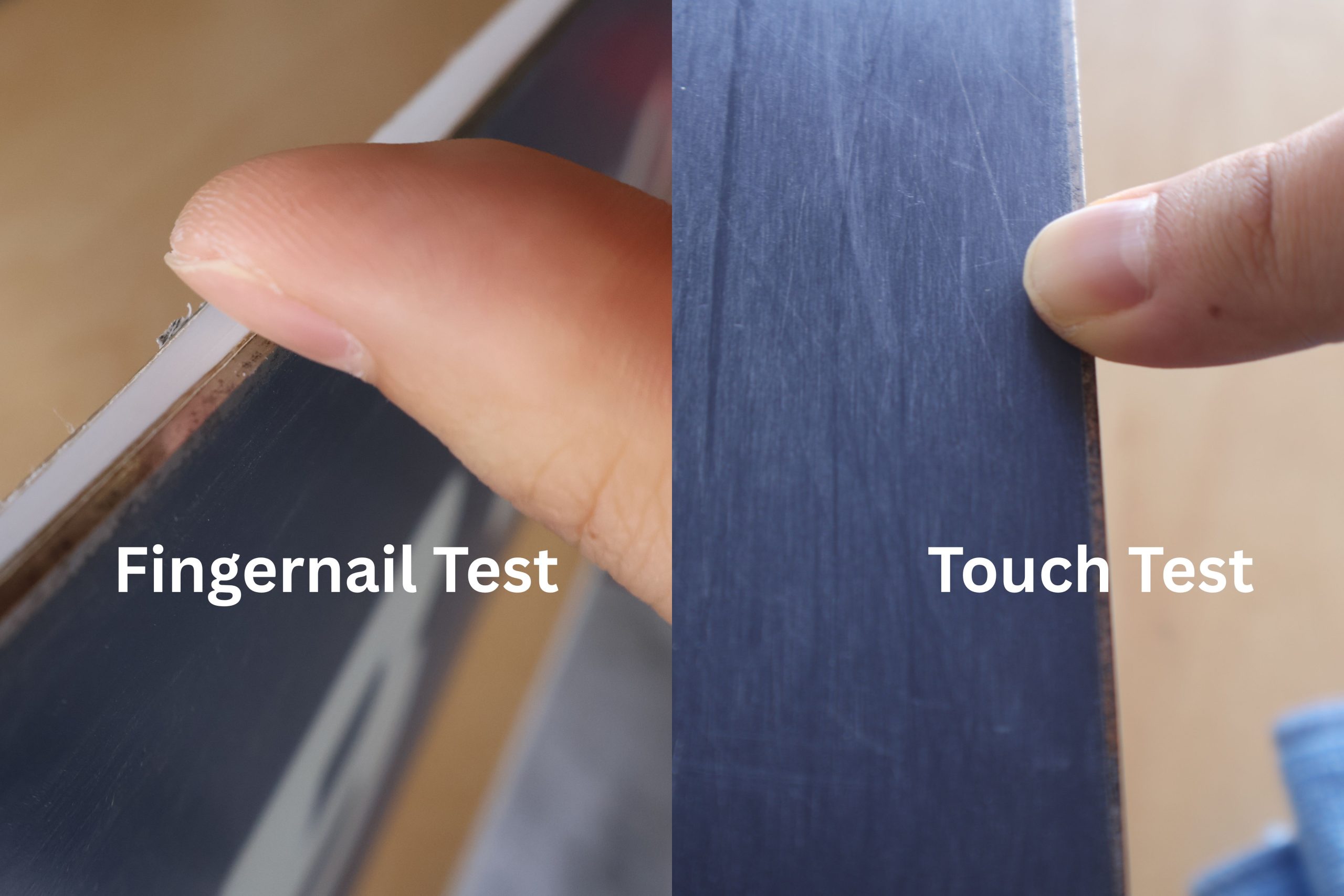
Fingernail Test
One common way of testing sharpness of your edge is the Fingernail Test: lightly drag your fingernail across the metal edge at a slight angle, if it shaves off a tiny sliver of nail, then it’s sharp enough. If your edges are dull, your fingernail will glide over the edge without grabbing. If it can’t catch something as soft as a fingernail, it won’t grip firm snow either. Just be careful not to hurt yourself, press gently and move slowly.
Touch Test
Run your fingertip lightly across the edge (perpendicular to the edge, not along its length). A sharp edge should feel crisp and consistent. As you work your way along, feel for anything that stands out: sections that feel smooth and rounded, flat spots, rough or jagged patches, and any dents or nicks in the metal. If any part of the edge feels noticeably different from the rest, you’ll know you need to sharpen that section.
There’s a risk of cutting your finger with this test, so be very careful when doing this. A safer alternative is to run a rag/cotton ball across the edge, if a piece of fabric/cotton snags, there’s probably a burr.
Visual Inspection
When inspecting your edges, there are a few specific things to look out for. Rounded edges will appear smooth, worn, or slightly flattened rather than crisp and defined. Rust shows up as orange, brown, or dark discoloration along the metal. Burrs are small raised or jagged bits of metal that stick out from the edge. Nicks and chips appear as tiny dents, gouges, or missing pieces of metal. Finally, look for uneven wear, sections that look noticeably shinier, flatter, rougher, or more worn than the rest of the edge.
5 Signs Your Snowboard Edges need Sharpening
In summary, you’ll know you need to sharpen your snowboard’s edge if:
- Your snowboard feels unresponsive.
- You skid more when trying to hold an edge, especially on hard packs.
- Your fingernail glide over the edge without grabbing when doing the fingernail test.
- The edge snags of cotton/rag when you wipe it.
- Your see rust and burrs.
Different riding styles call for different levels of edge sharpness. Carvers typically need sharper, cleaner edges since edge hold is central to their performance, while park riders generally prefer duller edges to avoid catching on rails.
If you love to carve and your board is showing any of these signs, don’t put it off, go sharpen it! Burton recommends to sharpen your edges every time you do a hot wax. For a step-by-step edge tuning walkthrough, check out this beginner’s guide on how to sharpen your snowboard.
I’d love to hear from you: Got questions? Spotted something unclear or want to share feedback? Please reach out to me in my contact page!