Snowboard Edge Bevel Guide: How Base and Side Bevels Affect Your Ride

Your snowboard edge bevel plays a significant role in how your board feel and respond. But what is a snowboard edge bevel?
In this guide, we’ll cover what base and side bevel are, what different angles mean, and how they affect your riding. Let’s begin!
Snowboard Edge Anatomy
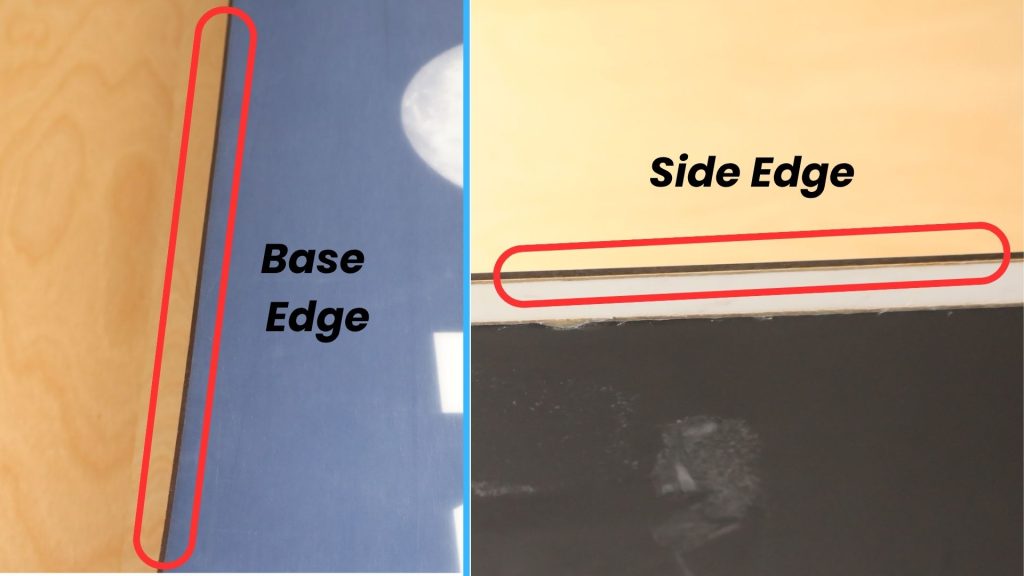
Your snowboard metal edge has 2 surfaces. One surface runs along the side of the board, which is known as the side edge. The other surface runs along the base, which is known as the base edge.
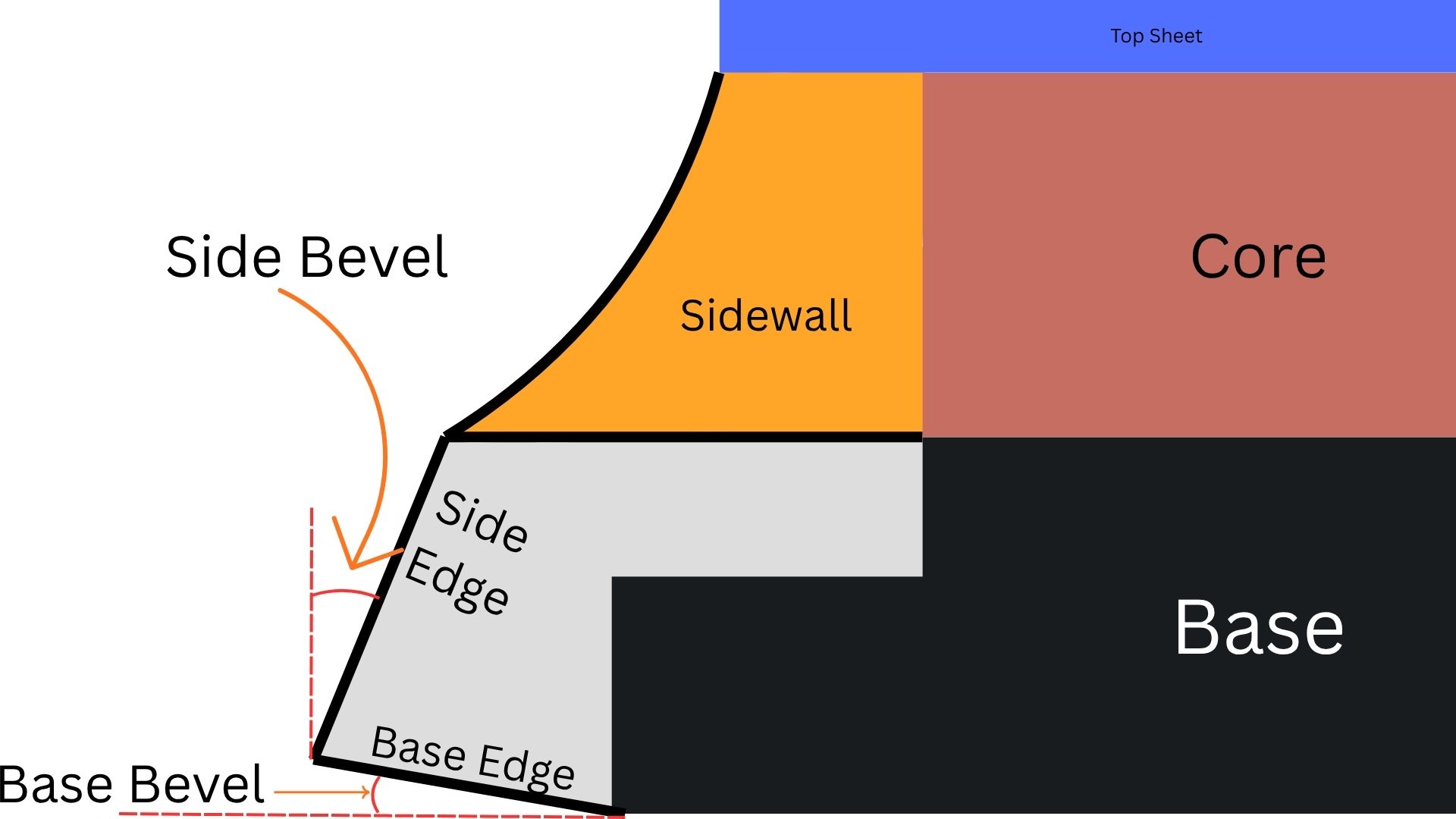
Your base edge doesn’t sit perfectly flush with the base, it’s usually factory produced at a slight upward angle away from the base. This angle is called the base edge angle, or more commonly known as the base bevel.
On the other hand. Your side edge doesn’t sit perfectly square with the sidewall. It’s usually factory produced at a slight inward angle toward the base. This angle is called the side edge angle, or more commonly, the side bevel.
The following diagram breaks down the base and side bevel visually.
How Base Bevel Affects your Riding
The base bevel controls how quickly your edge engages when you roll the board onto your toe or heel side. Typically, the base bevel ranges from 0.5° to 1.5°. Most snowboards are factory produced at 1° base bevel, and that’s the angle I recommend for beginner or intermediate riders.
Small Base Bevel: Faster Bite With Less Forgiveness
A smaller base bevel means the edge stays closer to the snow, so the edge can engage the snow sooner. This quick engagement is especially beneficial for carving because the board can immediately follow into its sidecut and drive through the turn rather than skidding first.
It also makes the board more responsive to your body movements, giving you tighter control over the shape and timing of each turn. The tradeoff is that a smaller base bevel leaves less room for error and can feel catchy if your technique isn’t clean.
Large Base Bevel: Less Catch for Park Riding
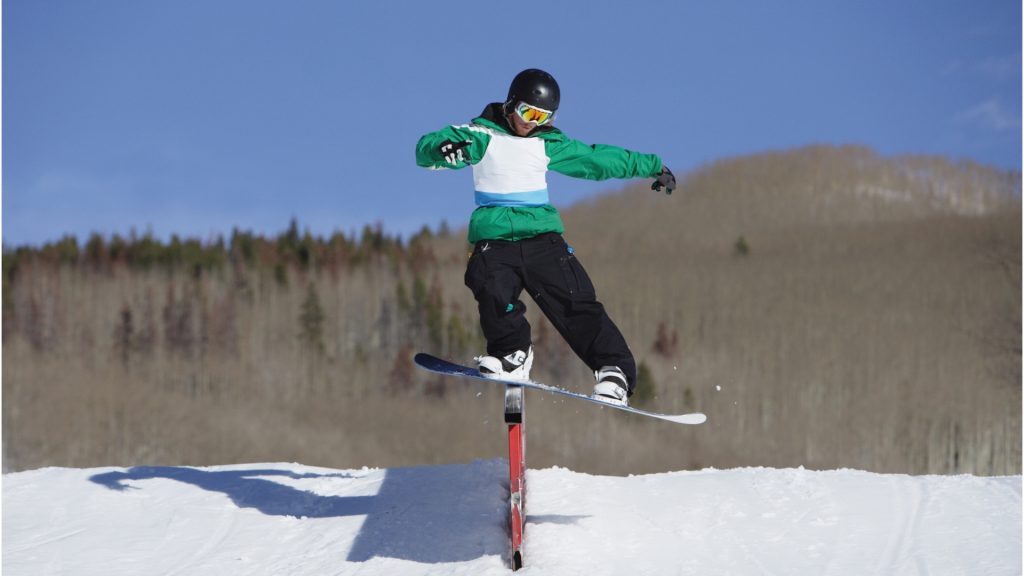
A larger base bevel works on the opposite principle, the edge sits further from the snow, so it engages later and feels more forgiving.
This makes it a popular choice for park riding, where catchiness can be a real problem. On boxes and rails, the board is often sliding sideways across the feature, and if the edge catches mid-slide it can stop the board suddenly or pull it off line. A larger bevel reduces that risk by giving you more margin for error.
The same applies to landings. When you come down slightly off-angle, a slower-engaging edge gives the board time to slide and correct before fully gripping, rather than catching immediately. It also helps with the skidded turns and quick speed checks park riders use to set up for jumps and features, keeping movements smooth without the board locking in too aggressively.
How Side bevel Affects your Riding
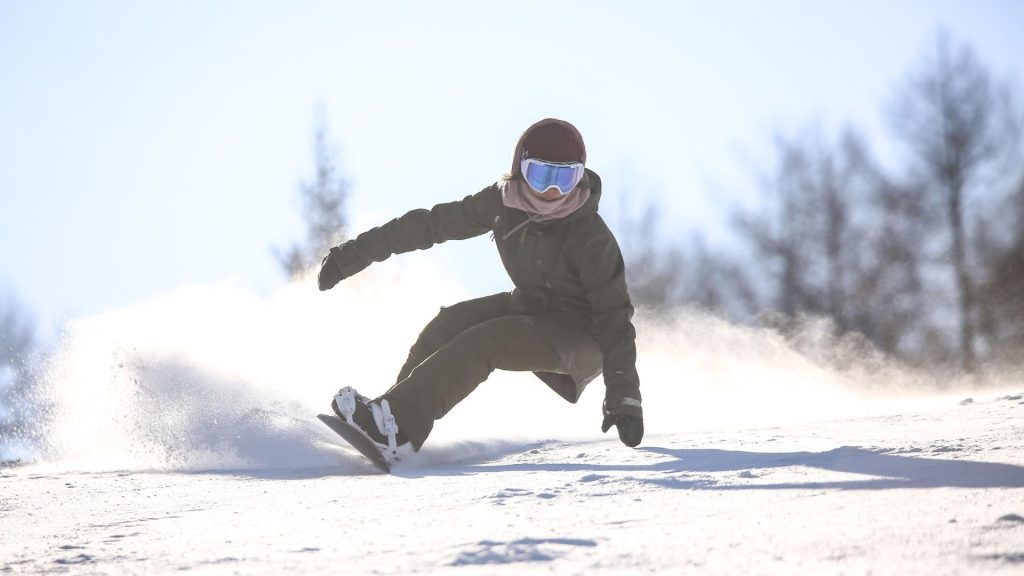
The side bevel controls how strongly your edge grips once it engages with the snow. Side bevel angles typically range from 89° to 85°, though you may also see these expressed as 1° to 5°. This simply refers to how many degrees the edge is ground away from a perfectly square 90°. For example, a 1° is equivalent to a 89° side bevel.
For beginners, I recommend a side bevel of 89°, or you can simply stick with your board’s factory default, which is usually listed online for your specific board.
Small Side Bevel: Stronger Edge Grip, Less Room for Error
A smaller side bevel (85° for example) creates a sharper cutting corner on the metal edge, which allows it to dig into the snow more effectively.
This stronger grip is critical for carving. This is because a carve depends on the edge staying locked into the snow while the board follows its sidecut. If the edge does not grip hard enough, you may drift sideways and skid.
Having a small side bevel is also good for riding in hardpack and icy conditions. This is because the snow surface is harder and gives the edge less to sink into. A sharper side edge has a better chance of cutting into that firm surface.
The tradeoff is that a smaller side bevel is less forgiving. The edge grabs firmly once it makes contact, which is great when you want grip but leaves less room for mistakes.
Large Side Bevel: Less Grip, More Beginner Friendly
A larger side bevel (89°) makes the board feel more forgiving and less grabby. This is especially useful for beginners, since this gives more room to make small mistakes. It also suits casual all-mountain riding, freestyle, and softer snow conditions where a smooth, controllable feel is more useful than maximum grip.
Snowboard Edge Bevel Summary
In summary, the base bevel controls how fast your board responds to your movement, while the side bevel controls the bite of your snowboard.
If you love to carve, a lower base bevel and a sharper side bevel will give you the grip and responsiveness you need. If you are a beginner, I recommend having a base bevel of 1° and a side bevel of 89°, which is also recommended by Burton. This would give you a controlled yet forgiving feel while you are still learning.
If you are wondering how to tune your snowboard edges, check out this beginner friendly guide!
I’d love to hear from you: Got questions? Spotted something unclear or want to share feedback? Please reach out to me in my contact page!