How to Prevent Rust on Snowboard Edges During Summer Storage

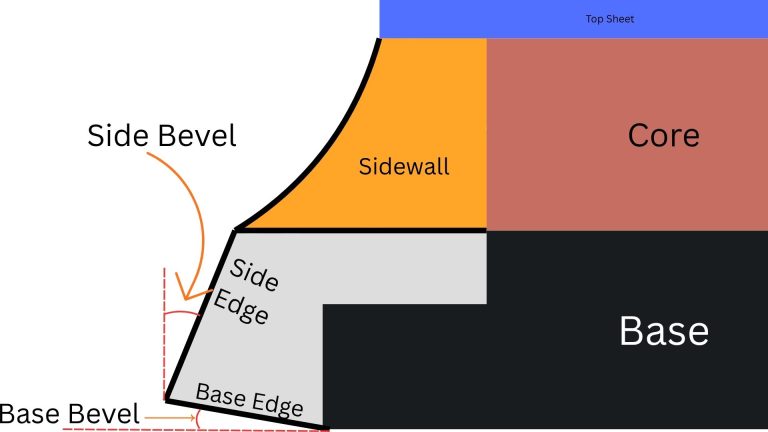
Why do you need to prevent rust on snowboard edges? A rusty edge makes your ride unpredictable because it won’t bite into the snow consistently. Your board will feel less smooth and harder to control.
But how does rust even form? Edges are made of steel, and steel contains iron. When iron is exposed to moisture and air, it can slowly turn into iron oxide, which is rust.
Follow these summer storage tips if you want to prevent rust on snowboard edges:
Clean Your Snowboard Edges
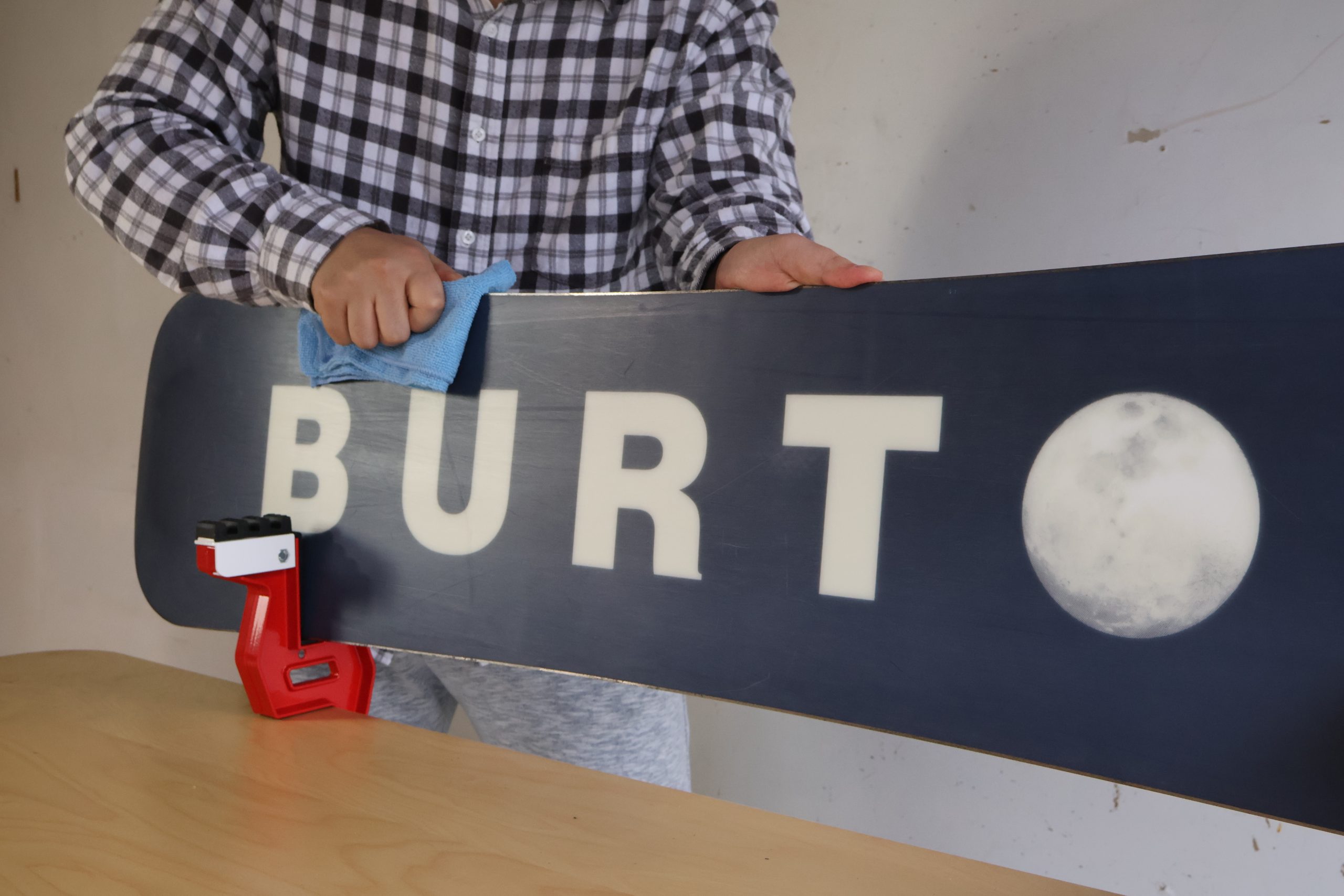
Why do you need clean the snowboard edges? Because mud and grime can trap moisture on the metal.
If salt is mixed in with the grime, that makes it even worse. Salt is hygroscopic, which means it actually pulls moisture out of the air around it. So even if you store your snowboard in a fairly dry room, any salt left on the edge will attract humidity and hold it against the metal. On top of that, salt makes water conduct electricity more easily, which speeds up the chemical reaction that causes rust.
That’s why a proper cleaning is essential before summer storage:
- Damp your towel with rubbing alcohol or warm soapy water
- Wipe along the steel edge from tip to tail.
- Dry immediately with a clean towel
Remove Rust and Burrs
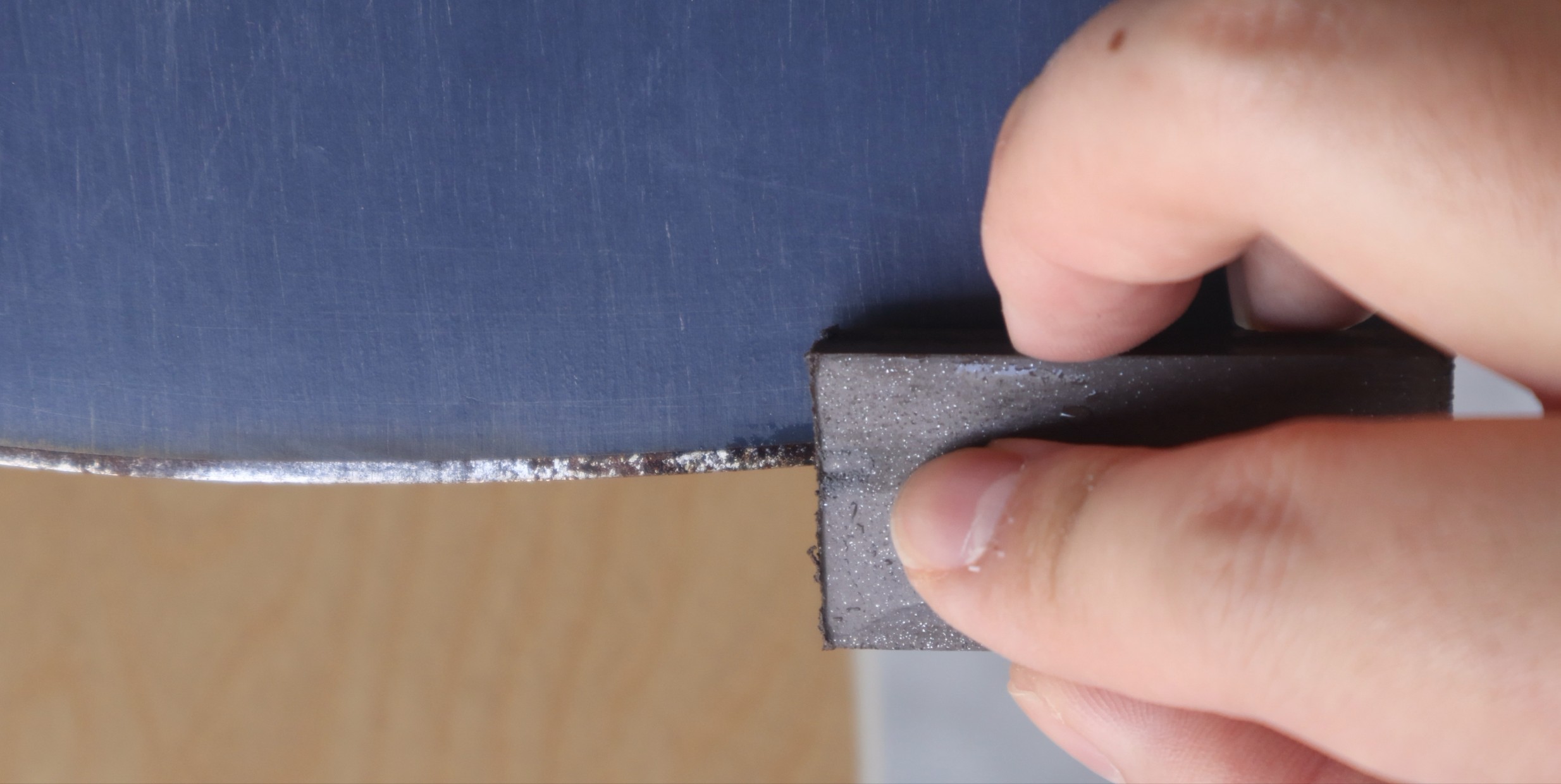
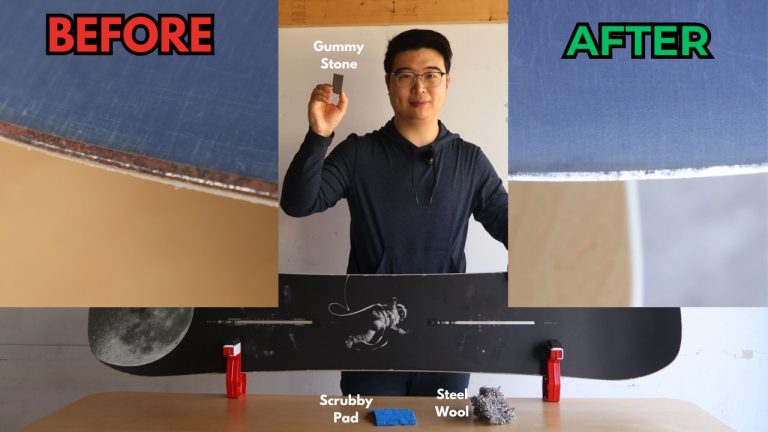
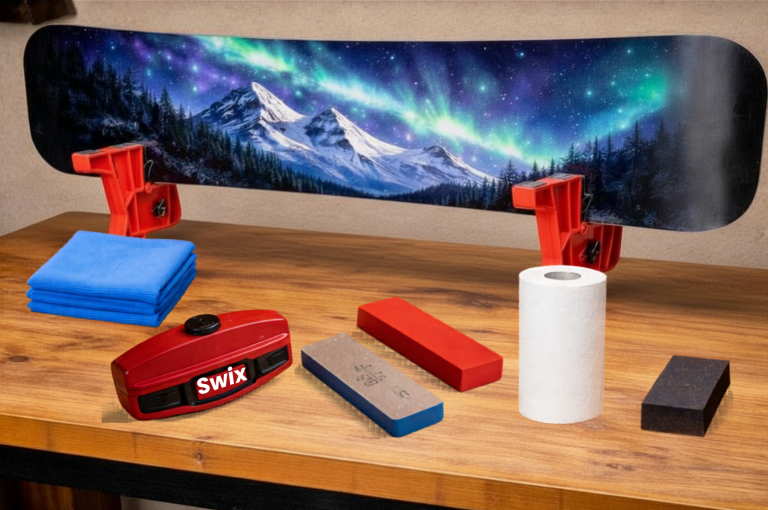
If your snowboard edge has light rust (light orange spots), remove it with a gummy stone. Just rub it over the affected area like an eraser on pencil marks. If the rust is stubborn, switch to a 400-grit diamond stone. It’s important to remove rust because rust is porous, so it traps moisture and dirt, accelerating the rusting process.
If your rag snags while wiping the edges, you have a burr. For minor burrs, hold the gummy stone flat against the base edge and make light tip-to-tail passes. Use gentle pressure only, no grinding.
If the burr is stubborn, knock it down first with a few light passes of a 400 grit diamond stone. Once the jagged edge is leveled, finish with the gummy stone to smooth and polish the surface.
After removing rust and burrs, wipe your edges clean and dry.
Side note: removing rust and burrs is a part of a process called edge tuning. Check out this guide for a deeper dive.
Choose the Right Storage Environment

The ideal spot clean, dry, and temperature stable.
Low humidity is the most important factor. Rate of rusting significantly increases when relative humidity is above 70%. So it’s best to avoid bathroom, laundry room, and damp basements. Look for normal indoor comfort conditions, roughly 30–55% relative humidity.
Temperature stability matters almost just as much. Big temperature swings can cause condensation. Even if the air humidity isn’t high, large temperature difference between night and day can cause moisture to collect on the metal. So it’s best to avoid attic, uninsulated garage, sunroom and mudrooms.
The best place is: closet, wall mounts in living room or bedroom, and under the bed (make sure the area is clean). It’s not recommended to store your board in a bag, according to ChristySports. But if you do use a bag, make sure the board and bag is completely dry.
Prevent Rust on Snowboard Edges
The most important thing to prevent rust on snowboard edges is to store it where clean, dry, and has constant temperature. But before you put it away for the summer, make sure to clean the edges thoroughly and remove rust and burrs.
I’d love to hear from you: Got questions? Spotted something unclear or want to share feedback? Please reach out to me in my contact page!
Check out this article for a complete guide on how to store your snowboard properly for the summer.